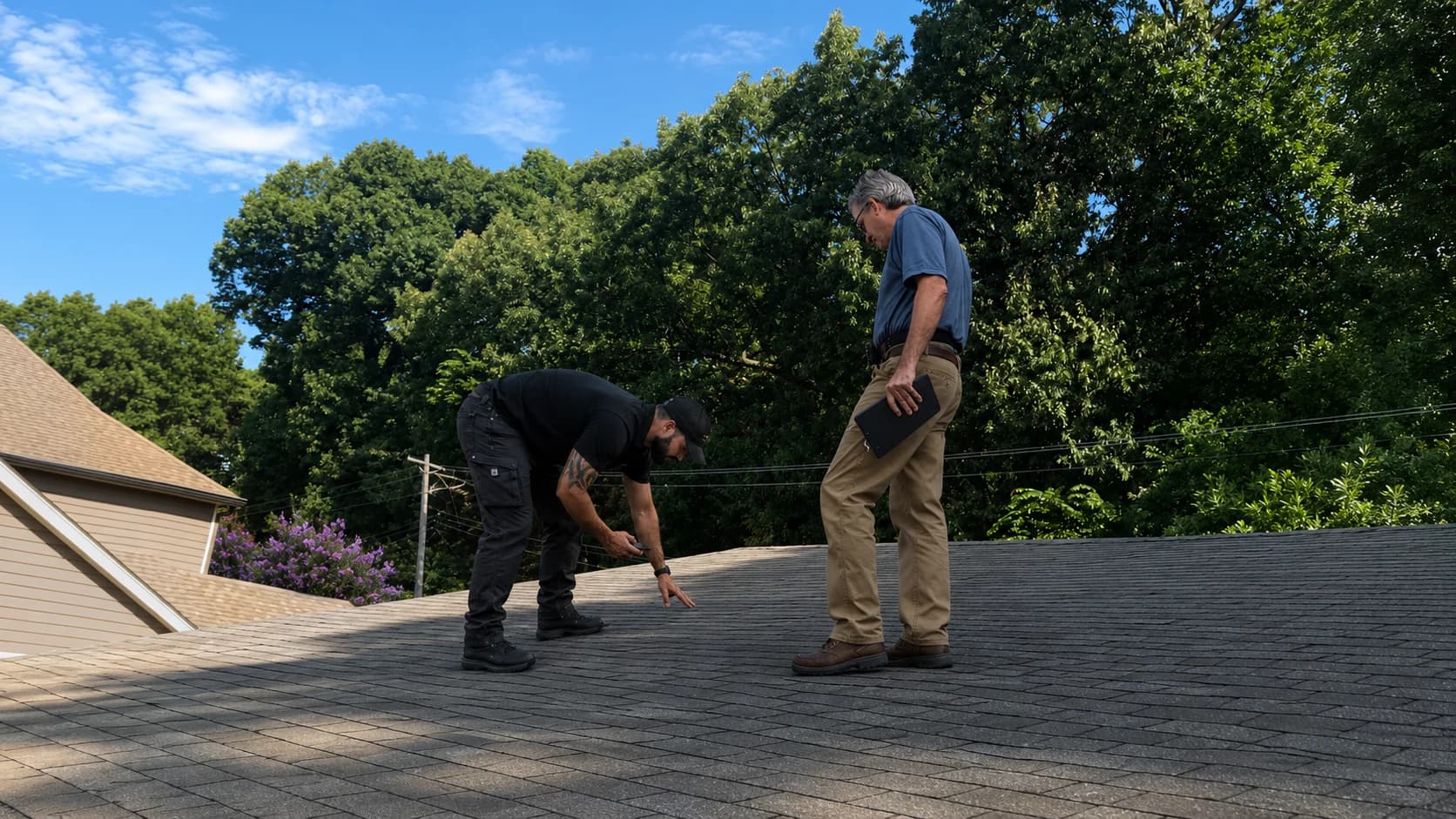
What happens when your insurance adjuster visits your roof.
The adjuster works for the insurance company. That doesn't make them the enemy — but it does mean having an experienced contractor present isn't optional. It's the single most important thing you can do for your claim.
Free inspection. No obligation. Serving Wilmington and all of southeastern NC.
The adjuster's job is to assess — not advocate.
Your insurance adjuster is employed by or contracted to your insurer. Their job is to assess the damage and determine what the policy covers. They're not adversarial, but they're also not on your side. A competent adjuster does thorough work. But adjusters cover many properties quickly, particularly after large storm events, and things get missed.
Adjusters are assigned after you file a claim — not before.
Staff adjusters work directly for the insurer. Independent adjusters are third-party contractors hired by the insurer for high-volume events.
Their estimate is not the final word. It can be supplemented.
Three things to do before the adjuster arrives.
01
Get a contractor inspection first
Have your roofing contractor complete a full documented inspection before the adjuster visit. You want a second set of professional eyes on the roof before anyone writes a number.
02
Have your contractor present
Request that your contractor be present during the adjuster's inspection. A good contractor can point out damage the adjuster might otherwise miss — and document what's noted and what's skipped.
03
Have your documentation ready
Photos from the storm, prior inspection reports, and any existing repair records all help establish the scope and timeline of damage.
What the adjuster looks at — and what they sometimes miss.
What they typically assess
- Shingle condition
- Granule loss and bruising
- Flashing and drip edge
- Gutters and downspouts
- Ridge caps
- Skylights and penetrations
What gets missed under time pressure
- Sealed decking issues beneath shingles
- Subtle uplift and broken seals
- Soft metal denting on HVAC caps and vents
- Interior water intrusion evidence
- Pre-existing damage vs. storm damage distinction on older roofs
The estimate isn't final. Here's what happens next.
01
You receive a settlement letter with ACV (actual cash value).
This is typically a check minus depreciation.
02
Your contractor reviews the scope.
If items are missing or underpriced, we prepare a supplement with documentation.
03
The supplement is submitted to the insurer.
They review and respond — often approving the additional items with supporting evidence.
04
Work begins when scope is agreed.
You pay your deductible. Insurance covers the rest.
Most residential claims are resolved without dispute. When gaps exist, they're usually resolved with better documentation — not confrontation.
What homeowners ask about the adjuster visit.
We attend adjuster visits. That's part of what we do.
We get on the roof before the adjuster arrives, walk the inspection with them, and follow up with supplements when needed. The inspection is free.
Learn more about the full claims process and storm damage coverage.